Sports physical therapy & performance training in Algonquin, IL


Sports Specific Care
Return to Throwing for
Baseball & Softball Athletes
Return to Throwing for
Baseball & Softball Athletes
At Athletic Edge and Wellness and Illinois Baseball Edge, we specialize in return-to-throwing rehabilitation for overhead athletes. We help baseball and softball players—from youth athletes to professional players—progress safely from injury or surgery back to throwing, competition, and peak performance.
Throwing a ball is one of the most stressful and complicated movements in sports. It requires the dynamic and coordinated muscular effort from head to toe. Any problem or small change in mechanics can quickly lead to pain and injury.
We take a multi-faceted approach to throwing that looks at the whole athlete not just the "injured body part". Often an elbow problem has a shoulder component and a shoulder problem has an elbow component. Furthermore, many ARM problems have connections to the LOWER BODY and CORE that need to be identified and addressed.

Individualized Return-to-Throwing Plans
We Keep You Throwing
Our goal is to keep you appropriately active and, when appropriate, progressively throwing while you heal. Rest from painful activities is different than rest from activity. The baseball season is short and intense in the Midwest, don't sit out more than you have to. For our throwing athletes; we have specialized equipment and training for graduated return to throwing but also for the continuum of improving your throwing velocity and performance.
A Specialized Return-to-Throwing Physical Therapy Facility

A Comprehensive, Staged Return-to-Throwing Approach

A Criteria-Based, Staged Approach to Return
Return-to-throwing programs are not one-size-fits-all. Published reviews of publicly available throwing programs have found substantial variation in how programs define readiness, progress distance and workload, address symptoms, and provide guidance for setbacks.
-
A recent study showed that of 99 publicly available return to throwing program were analyzed; only 20% cited any peer reviewed evidence and evidence was >10 years old.
-
Readiness: The athlete should meet appropriate physical and medical criteria before beginning throwing.
-
Progression: Volume, distance, and intensity should be progressed systematically rather than increased all at once.
-
Monitoring: Pain, soreness, fatigue, workload, and performance should be monitored throughout the progression.
-
Setbacks: A clear plan should exist for modifying the program when symptoms or excessive soreness occur.
Return-to-Throwing Equipment & Training
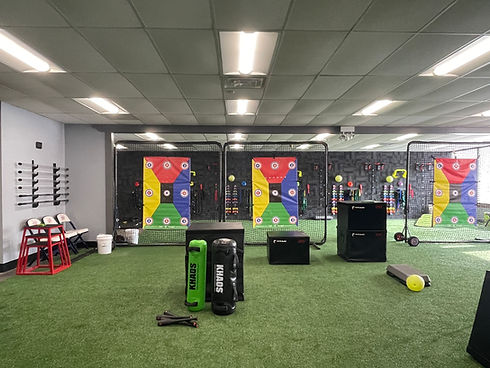
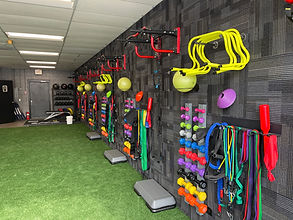
Return-to-throwing rehabilitation requires more than simply increasing the number of throws. The right drills and equipment can help athletes progressively rebuild strength, coordination, arm speed, movement quality, and tolerance to throwing while monitoring their response to increasing workload. Our Performance Facility is designed to help athletes recover, rebuild, move better, and perform at their best.
By utilizing specific equipment, we can help the arm to develop an appropriate arm path for return to throwing. Pain can alter how an athlete moves. Throwers may consciously or unconsciously change their arm slot, elbow position, wrist position, trunk movement, or lower-body mechanics to avoid symptoms. These compensations may help temporarily, but they can also change the way force is transferred through the kinetic chain. The body will move in a way to avoid pain.
Now with throwing a ball, this can just be a subtle change in mechanics, the arm slot might lower, the elbow angle might widen or the wrist might manipulate the hand position. All of the alterations occur simultaneously, as you cannot just isolate one body part. While these short-term alterations in mechanics may be advantageous, over time these adaptions can create problems and/or pain. Addressing movement and mechanics is necessary to prevent re-injury.
Some of the equipment we use to develop an appropriate arm path:
The TAP® Baseball Training Sock is an excellent exercise for athletes returning to throwing who have been shut down for a period of time. The throwing sock allows for throwing in confined space with minimal stress on the arm as athletes begins the process of return to throwing. This promotes light load and volume on the arm in safe manner.
The TAP® Connector Throwing Club is another tool to use with athletes during their physical therapy process. The throwing club is designed to help develop a connected and efficient overhand throwing pattern. Created by Ron Wolforth, and used at both the Texas Baseball Ranch® and the Florida Baseball Ranch®, this tool helps to the out-of-sequence external rotation of the throwing shoulder in relation to trunk rotation at front foot contact. It is intended to replicate throwing drills and makes an excellent choice for those returning to throw to develop appropriate arm movement patterns.
The TAP® Connection Ball™ is used to position proper arm positions and receive sensory feedback of both mechanical efficiency and potential of pain reduction in throwing. The connection ball is an invaluable tool for throwing as to help address dysfunctional throwing patterns; often these patterns are the reason of injuries happened in the first place. The connection ball can be used to help those individuals with an elevated or shoulder angle, a wide elbow angle, and develop glove side control and follow through.
Weighted Balls can be used in rehabilitation and performance under the strict guidance of a physical therapist or with a highly skilled pitching coach. Weighted balls are NOT always used for throwing as many other drills can be used to develop shoulder and arm strength and capacity. Weighted balls are used for specific drills to develop confidence in throwing as well as developing a feel for arm speed. Heavier balls are often used for developing proper neuromuscular control to help the brain re-wire proper throwing patterns. Weighted ball training is not recommended for our younger athletes.
Dynamic and Instability Training are exercises that involve moving the body through a full range of motion with dynamic movements and/or use of unstable workout tools. Dynamic training may involve the use of water balls/bags which creates full body strength and adaptability in unpredictable situations. Instability workouts engage more muscles, improves balance and coordination, enhances core strength, and boosts performance.
BlazePod® Light Reactivity Training is a reaction training system that utilizes interactive LED pods to enhance various training aspects of physical performance. Hand eye coordination is enhanced with exercises utilizing dynamic movements such as balancing, reaching, and agility. After injury or surgery, the brain must rewire movement patterns for peak performance. Blaze pods can be used with all sorts of sports training.
State of Art Plyometric Wall – plyometric training has consistently shown to improve strength and power. No other physical therapy clinic can offer this type of drill to their rehabilitation program. First, we start with lighter balls and simple patterns progressing to heavier balls and more dynamic and rotational movements needed in baseball. This helps to explosive power in their legs, core, and upper body. This power translates into stronger throws and quicker movements on the field. Plyometrics trains muscles to absorb impact forces more effectively through acceleration and deceleration which decreases the likelihood of injuries.
Arm Action Drills are exercises and movements specifically designed to improve the movement and mechanics of the arm (and body) path during baseball or softball throwing. These drills focus on enhancing coordination, strength, control, and endurance of the muscles involved in proper arm path. These drills help to develop appropriate power from the legs as well as sequencing and timing needed for optimizing velocity. Targeted drills may include focus on acceleration patterns, deceleration of the arm, or back foot rotation. Proper technique, progression, and individualization are essential for returning to throwing.
We offer Radar Guided Training. Radar is valuable tool for those returning to throwing after prolonged injury and/or Tommy John surgery, where careful monitoring of load and volume is extremely important for long term success. Often physicians have specific protocol that have athletes build up in both distance and intensity to get to 100%. It is imperative the throwing athlete develop the ability to progressively load the previously injured tissues and develop capacity to throw and pitch in games. How does one know what throwing at 70% effort actually is? Without radar training it is only a guess and it is often incorrect.

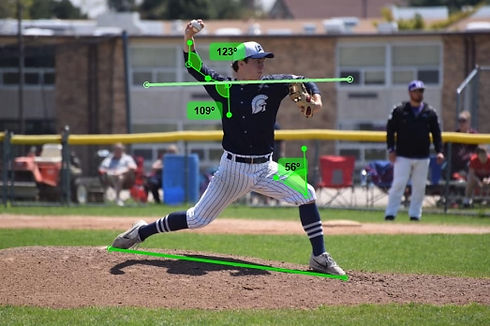
UPLIFT AI® provides advanced video analysis of pitching mechanics and movement. This AI technology helps identify movement patterns and mechanical factors that may affect performance, efficiency, consistency, and injury risk.
Unlike a traditional video review that relies primarily on visual observation, Uplift AI provides objective data and detailed movement analysis to help us better understand how an athlete moves through the pitching motion.
This assessment can help evaluate key components of the pitching delivery, including timing, sequencing, joint positions, movement patterns, and mechanical efficiency. We combine this information with our clinical evaluation to develop a more individualized approach to performance, rehabilitation, and injury prevention.
The goal isn't simply to change mechanics. It's to understand the athlete, identify opportunities for improvement, and help them move and perform more efficiently.
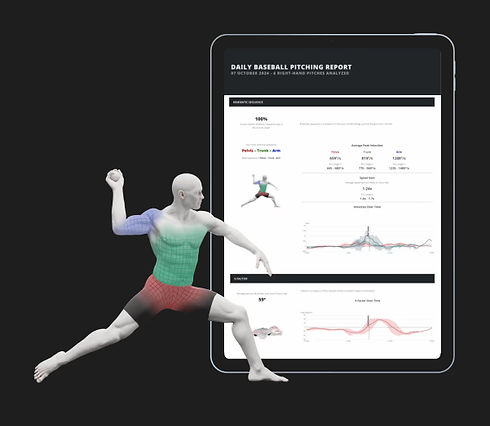
Understanding the biomechanics from the windup to ball release is imperative to your injury, rehab, and treatment plan. As a certified ON BASE UNIVERSITY PITCHING EXPERT and CHAMPION SPORTS PERFORMANCE SPECIALIST we have the expertise to help your thrower get back to doing what they love.
Whether you're returning after an injury, surgery, or time away from throwing, we can help determine the next step in your rehabilitation and return-to-throwing progression.
Helping baseball and softball athletes in Algonquin, Huntley, Crystal Lake, Barrington, Elgin, Dundee, Cary, Carpentersville, Hampshire, McHenry County, and Northwest Chicagoland return to throwing.

Target Training
After injury or surgery, the throwing arm needs time and practice to rebuild the accuracy, timing, coordination, and movement patterns required for baseball and softball. As appropriate within the athlete's rehabilitation and medical restrictions, short-distance target throwing can be incorporated to begin reintroducing these demands in a controlled environment.
Target work gives athletes an opportunity to practice intentional, accurate throws while gradually rebuilding arm confidence and tolerance. It can progress from shorter distances and lower-intensity throws toward greater distance and intensity as the athlete demonstrates appropriate physical readiness and recovery.
Different throwing angles, positions, distances, and ball weights may be incorporated to progressively vary the demands placed on the throwing arm. These variations can help prepare the athlete for the different throwing positions and situations they will encounter when returning to practice and competition.
Target throwing is not simply about getting the ball to a target. It is another tool we can use to progressively bridge the gap between rehabilitation and real-world throwing demands while monitoring symptoms, workload, mechanics, and recovery.
Flat-Ground Throwing Progression
Returning to throwing is a progressive re-loading process. Once an athlete is medically and physically ready to begin throwing, we use a structured flat-ground progression to gradually rebuild the arm’s tolerance to throwing while monitoring how the entire body responds.
Our progression focuses on three key variables: volume, distance, and intensity. These variables are progressed systematically rather than increasing everything at once.
Progress Volume First
The initial goal is to establish tolerance to throwing before increasing the demands of each individual throw. We begin with an appropriate number of throws and throwing days based on the athlete’s injury, rehabilitation status, age, position, and medical protocol.
As tolerance improves, throwing volume can gradually increase through additional throws or throwing sessions. The athlete's response during and after throwing is monitored before progressing to the next level.
Progress Distance
Once the athlete demonstrates appropriate tolerance to the initial throwing volume, distance can gradually increase.
A typical progression may move from shorter-distance throws toward longer-distance throwing—for example, 30 feet → 45 feet → 60 feet →90 feet and longer distances—but the exact distances and progression are individualized.
Distance increases the demands placed on the throwing system. An athlete should demonstrate the ability to handle the current distance and workload before progressing farther.
Long toss is not simply the next step because an athlete feels good. The athlete should first demonstrate adequate strength, endurance, movement quality, and workload tolerance at shorter distances.
Progress Intensity Last
Throwing intensity is typically the final variable we increase. Early throwing may be performed at a controlled, comfortable effort before gradually progressing toward higher-effort throws.
Perceived effort can be useful, but it is not always an accurate representation of actual throwing intensity. When appropriate, we can use radar-based velocity monitoring to help quantify intensity and provide objective feedback during the progression.
The goal is not simply to throw harder. The goal is to progressively prepare the athlete to tolerate the velocity, workload, and repeated efforts required by their position and sport.
A Criteria-Based Progression
Progression is not based solely on a calendar or a predetermined number of weeks. Before advancing, we consider the athlete's response to the current workload, including:
-
Pain during or after throwing
-
Arm soreness, fatigue, and recovery
-
Throwing volume tolerance
-
Strength and endurance
-
Mobility
-
Movement quality and mechanics
-
Position-specific demands
-
Medical or surgical restrictions
The goal is to build capacity before velocity. An athlete may be pain-free and still not be ready for high-intensity throwing. Our return-to-throwing process progressively prepares the athlete for the demands of their specific position and ultimately for practice and competition.
Mound Work
For pitchers, returning to throwing eventually needs to progress beyond general throwing and toward the specific demands of pitching.
Returning to throwing is different from returning to pitching. For pitchers, eventually progressing from flat-ground throwing to throwing from a mound is an important part of preparing for the demands of competition.
Athletic Edge and Wellness with our partners at Illinois Baseball Edge is the only physical therapy facility in the area with an on-site pitching mound, allowing pitchers to integrate mound work into their rehabilitation and return-to-throwing progression when medically appropriate.
This gives pitchers the opportunity to progressively work on mound-specific demands, including pitching mechanics, intensity, workload, balance, timing, and confidence—bridging the gap between rehabilitation and returning to the mound.

Extended Care Beyond Rehabilitation
Returning a pitcher to throwing is only one part of the process. Once an athlete is ready to begin transitioning from rehabilitation into performance, we can extend their care through Illinois Baseball Edge and Ernie Smith, an elite overhead throwing coach.
This creates a bridge between physical rehabilitation and throwing and pitching performance. Our goal is to help identify and address disconnects between what the athlete is physically capable of doing and what they are doing mechanically when they throw.
Working together, the transition can progress from rehabilitation → throwing → mound work → pitching performance
During this time communication between the physical therapy and coaching sides of the process is integral to the athlete's success.
This allows the athlete to continue developing their throwing mechanics, movement patterns, and pitching skills while maintaining the physical foundation established during rehabilitation.

Integrated Return-to-Throwing Ramp-Up
As the athlete progresses through their return-to-throwing program, IBE can begin incorporating arm path and throwing drills while we continue addressing the athlete's relevant physical therapy goals.
This allows the athlete to work on throwing mechanics and movement patterns while simultaneously continuing to build the mobility, strength, stability, endurance, and movement capacity needed to support those mechanics.
Rather than treating rehabilitation and throwing as two separate processes, we can identify potential disconnects between the athlete's physical capabilities and their throwing mechanics and address them together.
The transition from rehabilitation throwing to full pitching is carefully managed. We collaborate on throwing volume, distance, intensity, workload, recovery, and progression, while considering the athlete's position, level of competition, injury history, and medical restrictions.
Overhead Throwing Video Assessment
Frequently Asked Questions
About Return to Throwing
When can I start throwing after an injury?
You should begin throwing when your injury has progressed to the point that your physician and rehabilitation team determine you are ready. Readiness typically includes appropriate healing, pain-free or appropriately tolerated range of motion, adequate strength and endurance, and the ability to perform the physical demands required for throwing.
Return to throwing should be based on readiness and objective criteria—not simply a specific number of weeks after an injury. Your program should then gradually rebuild throwing volume, distance, intensity, and sport-specific demands.
How long does a return-to-throwing program take?
There is no single timeline that works for every athlete. The length of a return-to-throwing program depends on the injury or surgery, tissue healing, strength and endurance, throwing history, position, competition level, and how your arm responds to increasing workload.
A properly designed program progresses when you demonstrate that you are ready for the next level rather than advancing simply because a certain number of days has passed.
Do I need to be completely pain-free before I start throwing?
Not every athlete will have identical symptoms during rehabilitation, but throwing should not be used to push through sharp or increasing pain. Before beginning an interval throwing program, your rehabilitation team should determine whether your symptoms, strength, mobility, and overall function are appropriate for throwing.
During a throwing progression, your response to workload matters. Persistent or worsening pain, swelling, or changes in arm function should be addressed before progressing.
Does return to throwing differ for pitchers and position players?
Yes. The demands of throwing vary significantly by position. Pitchers must ultimately tolerate higher throwing volumes and repeated high-intensity throws, while position players may have different demands based on their position, throwing distance, frequency, and game responsibilities.
A return-to-throwing program should be individualized to the athlete's position, competition level, throwing demands, and goals rather than using the same progression for every player.
Can you help me return to throwing after Tommy John surgery?
Yes. Return to throwing after UCL reconstruction (Tommy John surgery) requires a carefully progressed rehabilitation and throwing program coordinated with your surgeon and medical team.
The goal is not simply to get you throwing again. Rehabilitation should restore the strength, mobility, endurance, movement quality, and whole-body capacity needed to tolerate throwing before progressing toward higher-intensity baseball demands. ASMI emphasizes coordinated use of the entire kinetic chain and graduated throwing following UCL injury and surgery.
Your surgeon's postoperative protocol and individual healing timeline always take priority.
Can you help baseball and softball players return to throwing?
Yes. Return-to-throwing programs can be individualized for baseball and softball athletes of different ages, positions, and competition levels.
The progression can be tailored to the athlete's injury, throwing demands, position, current capacity, and goals. Whether you are a pitcher returning to full-effort pitching or a position player rebuilding your throwing tolerance, the goal is to progressively prepare your body and arm for the demands of your sport.
Not Sure What Your Thrower Needs?
Set up an Appointment Today!