Sports physical therapy & performance training in Algonquin, IL


Sports Specific Care
Baseball Physical Therapy in Algonquin, IL
Baseball Physical Therapy for Catchers, Pitchers, Hitters, Infielders, and Outfielders
At Athletic Edge & Wellness, we provide specialized baseball physical therapy serving athletes in Algonquin, IL and the Northwest Chicago suburbs. We treat competitive youth, high school, collegiate, and professional baseball players. Whether your athlete is dealing with shoulder pain, elbow pain, a throwing injury, or wants to improve arm health and performance, our individualized approach addresses the underlying factors that affect how the body moves, produces force, and tolerates the demands of baseball.
The throwing motion is a coordinated movement pattern that transfers force from the legs and hips through the core and trunk, scapula, shoulder, elbow, forearm, and hand. For throwing athletes, the arm is only one part of the equation. Limitations in mobility, strength, stability, or movement efficiency can affect throwing mechanics, increase stress on the arm, and interfere with performance.
From injury rehabilitation and arm care to performance assessments and a progressive return-to-throwing program, we help baseball players recover from injury, rebuild capacity, and prepare for the demands of their sport.
The baseball season is short and intense in the Midwest. Don’t sit out longer than you have to.
What is Baseball Physical Therapy
When an athlete develops pain or is recovering from an injury or surgery, rehabilitation needs to address more than the throwing arm alone. Treatment is individualized based on the athlete's injury, position, age, level of play, and goals. Intervention can include strength and endurance training, mobility work, manual therapy, movement retraining, progressive loading, acceleration/deceleration training and baseball-specific exercises.
Baseball physical therapy looks beyond the site of pain to identify the factors that may be contributing to an injury or limiting performance. When one part of this system is limited, weak, poorly controlled, or unable to tolerate the demands of throwing, other areas may be forced to compensate. We take a multi-faceted approach that looks at the whole athlete—not just the “injured body part.” An elbow problem may have a shoulder component, a shoulder problem may involve the elbow, and many throwing-related issues are influenced by the lower body and core.
Throwing athletes are often told to “shut it down” and stop all activity when pain develops. While rest from throwing may be necessary for certain injuries, complete inactivity is not always the answer. Rest from painful activities is different than rest from activity altogether. When medically appropriate, rehabilitation can include modified training and carefully progressed baseball-specific activity while the athlete heals and rebuilds capacity. The goal is to protect the injured tissue while maintaining the physical qualities needed for a safe return to baseball.
The goal isn't simply to get the athlete out of pain. It is to help rebuild the strength, mobility, control, and capacity required to safely return to baseball.
Who Do We Treat

Little League • Youth • Travel • High School • Collegiate • Adult Recreational • MiLB • MLB •
Common Injuries We Treat
-
Wrist Tendonitis
-
Little League Elbow
-
UCL Sprains/Tears
-
Flexor Pronator Strains
-
Little League Shoulder
-
Biceps Tendonitis
-
Rotator Cuff Pain
-
Shoulder Labral Pathology
-
Low Back Pain
-
Oblique Injuries
-
Hamstring Strains
-
Groin Strains
-
Patellar Tendonitis
-
Ankle Sprains

Baseball Catchers
Catchers have unique physical demands that require repeated squatting, rapid lateral movement, blocking, throwing, and explosive transitions from a low position. These demands place stress on the knees, hips, ankles, back, shoulder, elbow, wrist, and hand.
Common Catcher Injuries We Treat
-
Knee pain and patellar tendon injuries
-
Meniscus and other knee injuries
-
Hip and groin pain
-
Ankle sprains
-
Low back pain
-
Shoulder and elbow injuries
-
Wrist, hand, and finger injuries
-
Throwing-related injuries
Pitching places tremendous demands on the entire body. Studies show that roughly 50% to nearly 75% of young and adolescent throwers report some degree of arm pain while pitching.
Risk factors show exceeding 75 pitches in an outing, throwing more than 100 innings in a season, or throwing under fatigue significantly increases the odds of developing shoulder or elbow pain and serious overuse injuries.
Common Pitcher Injuries
We Treat
-
Rotator Cuff injuries
-
Labral injuries
-
Internal shoulder impingement
-
Biceps tendon injuries
-
Little League shoulder and elbow injuries
-
Hip and lower-extremity injuries
-
Low back pain


Baseball Hitters
Hitting is a powerful, rotational movement that requires the coordinated transfer of force from the lower body through the hips and trunk and into the upper body and bat. Limited mobility, strength, control, or rotational power can affect both performance and an athlete's ability to tolerate repeated swings.
Common Hitter Injuries We Treat
-
Low back pain
-
Oblique strains
-
Hip pain
-
Hip flexor strains
-
Groin injuries
-
Hamstring strains
-
Shoulder injuries
-
Elbow injuries
-
Wrist and hand injuries
-
Knee injuries
Baseball Infielders
Infielders need to accelerate, decelerate, change direction, dive, slide, field from multiple positions, and make quick, high-effort throws. These repeated movements place demands on the lower extremities, hips, trunk, and throwing arm.
Common Infielder Injuries
We Treat
-
Ankle sprains
-
Knee injuries
-
Meniscus and ligament injuries
-
Hamstring strains
-
Quadriceps strains
-
Hip and groin injuries
-
Low back pain
-
Shoulder and elbow injuries
-
Wrist and hand injuries


Baseball Outfielders
Outfielders need the ability to sprint, accelerate, decelerate, change direction, track the ball, jump, dive, and make long-distance throws. These demands place significant stress on the hips, hamstrings, knees, ankles, back, shoulder, and elbow.
Common Outfielder Injuries
We Treat
-
Hamstring strains
-
Quadriceps strains
-
Hip and groin injuries
-
Ankle sprains
-
Knee injuries
-
Low back pain
-
Shoulder and rotator cuff injuries
-
Labral injuries
-
Elbow injuries
-
Wrist and hand injuries
RETURN TO THROWING should be a progressive, criteria-based process that rebuilds the athlete's ability and capacity to tolerate fully intensity throwing. Being pain-free does not automatically mean an athlete is ready to throw.
At Athletic Edge & Wellness, we consider strength, mobility, movement quality, workload, recovery, and the athlete's position and level of play. Progression typically emphasizes throwing volume first, then distance, followed by intensity, position-specific demands, and competitive throwing. The sequence and rate of progression are individualized based on the injury, healing stage, and clinical recommendations from the medical team.
A return-to-throwing progression may gradually advance:
Volume → Distance → Intensity → Position-Specific Throwing → Competitive Throwing
The goal is not simply to get the athlete throwing again.
For pitchers, the progression may eventually incorporate mound work, pitch intensity, pitch volume, and pitching-specific demands. Position players may require different throwing parameters based on their position and game demands.
Arm Care Programs & Injury Prevention
Arm care should not begin when an athlete develops pain. It should be part of a baseball and softball player's overall training and preparation throughout the year.
Effective arm care goes beyond simply performing a list of shoulder exercises. Baseball and softball players need the mobility, strength, endurance, control, and recovery strategies necessary to handle the demands of throwing. These priorities, goals, and arm care interventions shift depending on if the athlete is IN-SEASON or OFF-SEASON.
At Athletic Edge and Wellness, arm care may address:
-
Rotator cuff strength and endurance
-
Scapular control
-
Shoulder and thoracic mobility
-
Core and trunk control
-
Hip and lower-extremity contribution
-
Acceleration and Deceleration capacity
-
Throwing workload and recovery
-
Movement patterns that may increase stress on the arm
-
Proper Warm up
-
Individualized Recovery Program
Our approach recognizes that the arm does not work alone. Efficient throwing requires coordinated movement from the ground up.
For athletes who want a more comprehensive look at their physical readiness and arm health, the Full Count Assessment combines full-body assessment with an arm care assessment to identify mobility, strength, movement, and performance opportunities.
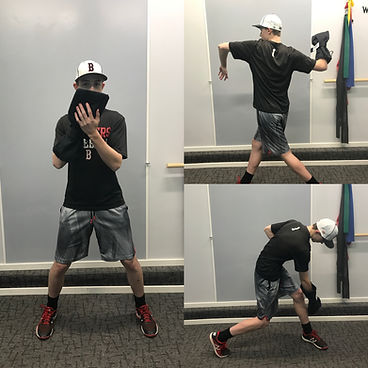
Performance Therapy for Baseball Players
Baseball performance is about more than throwing harder. Athletes need to move efficiently, produce force, control their bodies, and repeatedly tolerate the demands of their position.
Performance Therapy at Athletic Edge and Wellness identifies movement and physical limitations that may affect how an athlete moves, throws, hits, runs, and performs.
Depending on the athlete's needs, performance training may address:
-
Mobility limitations
-
Strength and power
-
Core and trunk control
-
Hip and lower-extremity function
-
Shoulder and scapular strength
-
Rotational movement
-
Balance and body control
-
Deceleration and force absorption
-
Throwing mechanics and movement efficiency
The goal is to connect the physical demands of baseball with the athlete's individual movement profile.
Move better. Perform better. Be better.
Whether an athlete is returning from injury, preparing for a new season, or looking to improve performance, Performance Therapy provides a structured approach to developing the physical qualities baseball requires.
Assessments for Baseball Players
You can't fix what you don't assess.
Athletic Edge and Wellness offers baseball-specific assessments designed to look beyond a single body part and evaluate how the athlete's body functions as a whole. The purpose is simple: identify the opportunities before they become problems—and create a plan to help the athlete move and perform at their best.
SCORE Movement Assessment
The SCORE Assessment evaluates movement, mobility, strength, and body mechanics to identify areas that may be limiting an athlete's performance. Rather than simply identifying what is "bad," SCORE highlights areas for improvement and provides a framework for targeted performance development. The SCORE Assessment is a baseline assessment designed for the younger baseball and softball athlete.
The Full Count Assessment
The Full Count combines a comprehensive full-body assessment with an arm care assessment. It is designed to identify physical limitations and opportunities involving mobility, strength, movement, and arm health.
The Full Count is designed for baseball and softball athletes who want a comprehensive look at their whole-body movement, strength, mobility, and throwing-arm readiness—from developing athletes to highly competitive players. This can be especially valuable for highly competitive and elite baseball and softball players preparing for a season, returning from an injury, or looking to improve their performance for throwing.
Depending on the athlete's goals and needs, an assessment may also incorporate throwing and baseball-specific performance factors.
Overhead Video Assessment
Video can provide another layer of information when evaluating a baseball player's throwing mechanics. An overhead video assessment allows throwing mechanics to be reviewed from multiple angles to identify movement patterns, timing, positioning, and potential areas for improvement.
With our partners at Illinois Baseball Edge, video assessment can be used alongside the athlete's physical examination and movement assessment—not as a replacement for clinical evaluation. The goal is to connect what the athlete does on the mound or field with what is happening physically in the body.
AI Pitching Assessment
For pitchers looking for a more detailed analysis of their delivery, our partner Illinois Baseball Edge also offers an AI-powered pitching assessment using Uplift AI technology.
AI-assisted video analysis can provide additional quantitative information about pitching mechanics and movement patterns that may be difficult to identify through visual observation alone. This technology can help evaluate specific aspects of the pitching delivery and provide additional data to complement the athlete's physical assessment.
The AI assessment is most valuable when combined with a comprehensive evaluation of the athlete's mobility, strength, movement quality, and physical capacity. Rather than looking at mechanics in isolation, the goal is to connect pitching movement with the athlete's physical abilities and develop a more individualized performance or rehabilitation plan.
When Should My Baseball or Softball Player See a Physical Therapist?
-
Pain while throwing or pitching
-
Pain that persists after throwing
-
Decreased velocity or throwing distance
-
Loss of control or accuracy
-
Changes in throwing mechanics
-
Difficulty recovering between outings
-
Returning after surgery or significant injury
-
Recurrent arm or lower-body injuries
-
Preparing for a new season after previous injury

Throwing Expertise for Your Athlete
Not all physical therapists have specialized expertise in the unique demands of overhead throwing. As a Certified Overhead Throwing Expert and Champion Sports Performance Specialist, Athletic Edge and Wellness provides specialized care for baseball players at every level. We understand how to progress an athlete from rehabilitation back to the field.
Throwing into a trampoline can be one part of rehabilitation—but it isn't the same as preparing an athlete for 7 innings of competitive baseball. A successful return requires a progressive plan that prepares the athlete for the demands of real baseball—including throwing volume, distance, intensity, position-specific demands, and ultimately game intensity. Waiting until the final stage of rehabilitation to begin throwing will not adequately prepare an athlete for those demands.
Understanding the biomechanics of the baseball throw—from the windup through ball release and deceleration—is an important part of developing an individualized rehabilitation and performance plan. Baseball physical therapy can help athletes recover from injury, reduce pain, restore mobility and strength, improve movement efficiency, and build the capacity needed to return to the field and perform with confidence.
Athletic Edge and Wellness combines physical therapy with specialized performance training and a 360-degree approach that considers the entire throwing athlete—not just the painful area. We are your experts in baseball care throughout Algonquin, Huntley, Crystal Lake, Barrington, Elgin, Dundee, Cary, Carpentersville, Hampshire, McHenry County, and Northwest Chicagoland.
Is your baseball player experiencing pain with throwing or struggling to return to the field?
Contact Athletic Edge and Wellness to schedule an evaluation. 224-505-3343

Contact Athletic Edge & Wellness Physical Therapy for pain relief and wellness
Set up an Appointment Today!