


Core Stability for Baseball Athletes: 10 Exercises to Build a Stronger, More Powerful Throwing and Hitting Foundation
Kathy Ryan-Ceisel, PT MHS | Algonquin Sports PT
Overhead Throwing Expert-Athletic Edge and Wellness Edge
Why Core Stability Matters for Baseball Players
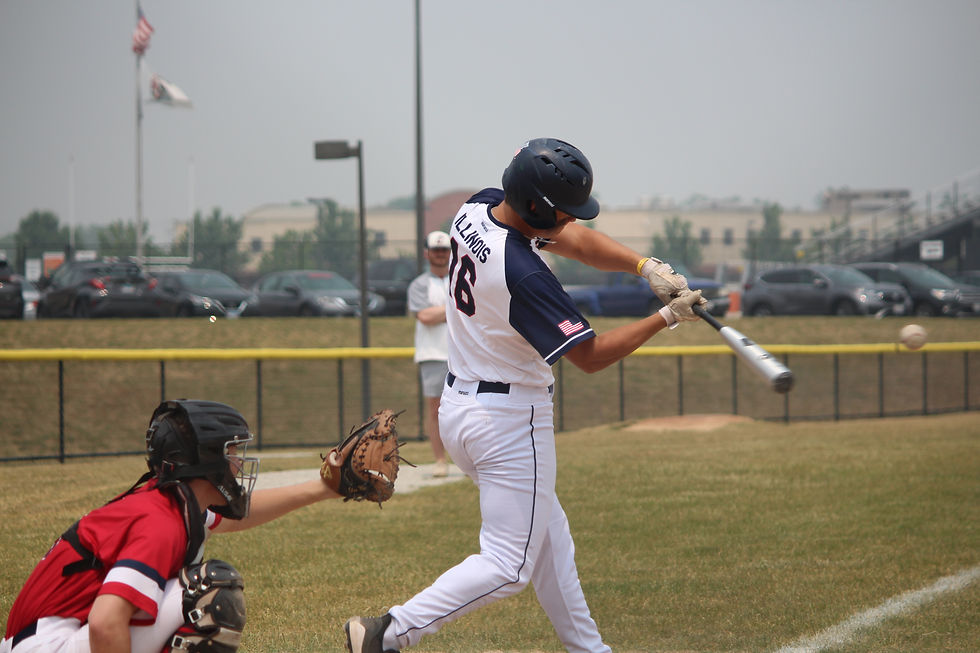
Baseball is a rotational sport.
Every pitch, throw, swing, sprint and change of direction requires the athlete to coordinate the legs, hips, pelvis, trunk, shoulder and arm.
The core sits in the middle of this kinetic chain.
It helps connect the lower body to the upper body, allowing an athlete to create, transfer and control force.
For baseball players, core training should not simply mean doing hundreds of crunches or holding a plank until you cannot hold it anymore.
A well-designed baseball core program should teach an athlete to:
Control the pelvis
Maintain spinal position
Stabilize the trunk while the arms and legs move
Resist unwanted rotation
Resist excessive extension
Control lateral trunk movement
Transfer force from the lower body to the upper body
Maintain balance during single-leg movements
Control deceleration
Eventually produce and control rotational force
This is particularly important for pitchers.
During pitching, force is generated from the ground and lower extremity and transferred through the pelvis and trunk before being delivered through the throwing arm. The ability to efficiently control the trunk can therefore influence how force is transferred through the kinetic chain.
Recent research in adolescent pitchers found that an 8-week core training program improved trunk-rotation strength and power and was associated with improvements in ball speed. Importantly, however, the intervention also increased elbow varus moment, reinforcing an important clinical point: improving physical capacity can change the demands placed on the throwing arm. Core training should therefore be part of a comprehensive program—not viewed as a magic solution for increasing velocity.
What Exactly Is the "Core"?
The core is much more than the abdominal muscles.
It includes the muscles and structures surrounding the:

Lumbar spine
Pelvis
Abdomen
Hips
Diaphragm
Back
Gluteal region
The core essentially functions as a connection between the upper and lower extremities supported superiorly by the diaphragm and inferiorly by the pelvic floor. The core is a functional hub that contributes to force transmission and control between the limbs.
For baseball players, this means the core needs to do more than simply create stiffness. It needs to stabilize, move and adapt to rapidly changing forces.
Core Mobility + Core Stability: You Need Both
The previous article focused on core mobility.
This article focuses on core stability.
Mobility gives the athlete access to movement.
Stability allows the athlete to control that movement.
Strength allows the athlete to produce force.
Power allows the athlete to produce force quickly.
An athlete with poor mobility may compensate with other areas of the body.
An athlete with adequate mobility but poor stability may have difficulty controlling the available range of motion.
Mobility → Stability → Strength → Power → Sport-Specific Movement
For a baseball player, the goal isn't to make the trunk completely rigid.
The goal is to create the right amount of stability at the right time.
➡️A pitcher needs to resist unwanted motion during portions of the delivery but must also be capable of powerful, coordinated trunk rotation.
➡️A hitter needs to stabilize the trunk while creating tremendous rotational velocity.
Therefore, the best baseball core program should include both:
Anti-Movement Training
Exercises that teach the athlete to resist:
Extension
Rotation
Lateral flexion
Dynamic Rotational Training
Exercises that teach the athlete to:
Produce rotation
Transfer force
Decelerate rotation
Coordinate the hips and trunk
The 10 Best Core Stability Exercises for Baseball Players
1. Dead Bug
Primary focus:
Anti-extension core control
The dead bug is one of the best introductory exercises for teaching an athlete to control the relationship between the rib cage, pelvis and lumbar spine.
The athlete must maintain abdominal tension while moving the arms and legs independently.

Why baseball players need it
Pitchers and hitters need to control the pelvis and trunk while the arms and legs are moving rapidly.
The dead bug teaches the athlete:
Rib cage control
Pelvic control
Abdominal bracing
Contralateral coordination
Lumbar spine control
This is particularly useful for younger athletes who are still learning how to control their trunk.
How to perform
Lie on your back with hips and knees at approximately 90 degrees.
Keep the low back gently controlled against the floor.
Brace the abdomen without holding your breath.
Slowly extend the opposite arm and leg.
Return to the starting position.
Alternate sides.
Prescription
2–3 sets of 6–10 repetitions per side
Progression
Add weights or resistance bands to the arms or legs.
Coaching cue
"Keep your ribs down and pelvis still while your arms and legs move."
2. Bird Dog
Primary focus:
Contralateral stability and trunk control

The bird dog progresses core control into a quadruped position.
The athlete must stabilize the trunk while moving the opposite arm and leg.
Why baseball players need it
Throwing and hitting are highly contralateral movements.
The athlete must coordinate:
Right leg → pelvis → trunk → left arm and vice versa.
The bird dog reinforces this cross-body connection. It also challenges the athlete to maintain a stable spine while the hips and shoulders move.
How to perform
Begin on hands and knees.
Brace the abdomen.
Slowly extend one leg and the opposite arm.
Keep the pelvis level.
Pause briefly.
Return under control.
Alternate sides.
Prescription
2–3 sets of 6–10 repetitions per side or5–10 second holds per repetition
Progression
Add a resistance band or perform the movement from a narrower base of support.
Coaching cue
"Don't let your hips rotate." "Don't tip the glass of water on your back
3. Side Plank

Primary focus:
Anti-lateral flexion
The side plank challenges the athlete's ability to prevent the trunk from collapsing sideways.
Why baseball players need it
Baseball athletes constantly experience forces that attempt to move the trunk away from a neutral position.
The side plank trains:
Obliques
Quadratus lumborum
Gluteus medius
Lateral trunk stabilizers
It also provides an excellent connection between the shoulder, trunk and hip.
How to perform
Lie on your side.
Place the elbow underneath the shoulder.
Lift the hips from the floor.
Maintain a straight line from shoulder to ankle or knee.
Keep the pelvis stacked.
Hold without allowing the hips to drop.
Prescription
2–3 sets of 15-30 seconds per side
Progression
Progress from knees → feet → elevated feet → side plank with leg lift.
Baseball-specific benefit
A strong lateral core helps athletes control the trunk while transferring force through the hips and shoulders.
4. Pallof Press

Primary focus:
Anti-rotation
The Pallof press is one of the best exercises for teaching an athlete to resist rotational forces.
The resistance band or cable attempts to rotate the athlete toward the anchor point.
The athlete must resist that force.
Why baseball players need it
Baseball requires tremendous amounts of rotation—but athletes also need the ability to control rotation.
This is especially important during:
Pitching
Hitting
Fielding
Deceleration
Single-leg movements
How to perform
Attach a band or cable at approximately chest height.
Stand perpendicular to the anchor.
Hold the handle close to your chest.
Brace your core.
Press the hands straight forward.
Resist the band pulling you into rotation.
Return slowly.
Prescription
2–3 sets of 8–12 repetitions per side
Progression
Progress from:
Standing →tall kneeling → half kneeling → split stance → single-leg
Coaching cue
"Move your arms without letting your torso move."
5. Bear Plank

Primary focus:
Dynamic anti-extension and shoulder/core integration
The bear plank increases the demand on the abdominal musculature while incorporating the shoulders and hips.
Why baseball players need it
Baseball athletes need to stabilize the trunk while the extremities move.
The bear plank teaches the athlete to maintain trunk control while simultaneously loading the upper and lower extremities.
How to perform
Start on hands and knees.
Lift the knees approximately 1–2 inches from the floor.
Keep the spine neutral.
Brace the abdomen.
Maintain the position without shifting the hips.
Prescription
2–3 sets of 15–30 seconds
Progression
Add:
Shoulder taps
Forward/backward movement
Lateral movement
Coaching cue
"Keep your back quiet."
6. Copenhagen Plank

Primary focus:
Adductor, pelvic and lateral trunk stability
The Copenhagen plank is a challenging exercise that combines the trunk, hip and inner thigh.
Why baseball players need it
The adductors are extremely important for controlling the pelvis and transferring force between the lower extremity and trunk.
Baseball players use the adductors during:
Hitting
Pitching
Sprinting
Cutting
Lateral movement
Single-leg stabilization
This exercise is particularly useful for athletes who need to improve pelvic control.
How to perform
Place the top leg on a bench.
Support the upper body with the forearm.
Lift the hips.
Maintain a straight line through the body.
Keep the pelvis from rotating forward or backward.
Prescription
2–3 sets of 15–30 seconds per side
Beginner modification
Support the knee rather than the ankle.
Advanced version
Support the ankle and perform controlled hip abduction/adduction movements.
7. Suitcase Carry

Primary focus:
Anti-lateral flexion and functional trunk stability
The suitcase carry is deceptively simple. Holding a weight in one hand creates a force that wants to pull the athlete sideways. The athlete must maintain an upright posture while walking.
Why baseball players need it
This exercise integrates:
Grip
Shoulder stability
Trunk stability
Pelvic control
Hip strength
Gait
It is one of the easiest ways to take core stability from the floor into a standing athletic position.
How to perform
Hold a dumbbell or kettlebell in one hand.
Stand tall.
Keep the shoulders level.
Brace the abdomen.
Walk slowly.
Do not lean toward or away from the weight.
Prescription
2–4 sets of 20–40 yards per side
Progression
20% body weight for beginner athletes
30-50% body weight for intermediate athletes
50%+ body weight for advanced athletes
Coaching cue
"Walk tall. Don't let the weight pull you sideways."
8. Cable Chop or Lifts

Primary focus:
Controlled trunk rotation with hip involvement
The cable chop introduces controlled rotational movement.
Unlike the Pallof press, the goal is no longer simply to prevent rotation.
Now we want the athlete to produce and control rotation.
Why baseball players need it
This begins to bridge the gap between basic core stability and baseball-specific rotational movement.
The exercise teaches the athlete to coordinate:
hips → pelvis → trunk → arms

rather than simply rotating through the lumbar spine.
How to perform
Attach a cable or band above shoulder height or below at ankle level.
Stand in an athletic stance.
Rotate the hips and trunk together.
Pull the cable diagonally across the body; either upward or downward.
Maintain control throughout the movement.
Return slowly to the starting position.
Prescription
2–3 sets of 8–12 repetitions per side
Progression
Standing →tall kneeling → half kneeling → split stance → single-leg
Coaching cue
"Rotate through the hips and trunk—not just your low back."
Front Plank
Primary focus:
Anti-extension trunk stability
The front plank is a foundational core exercise. It teaches the athlete to maintain a stable trunk while resisting the tendency to extend through the lumbar spine.
Why baseball players need it
During athletic movements, forces can cause the trunk to extend or lose position.
The plank develops:

Abdominal endurance
Trunk stiffness
Shoulder stability
Pelvic control
Spinal control
How to perform
Place the elbows underneath the shoulders.
Extend the legs.
Brace the abdomen.
Squeeze the glutes.
Maintain a straight line from head to heels.
Avoid sagging or excessive hip elevation.
Prescription
2–3 sets of 20–45 seconds
Progression
Add: Arm taps/lifts, leg lifts, plank walks
Coaching cue
"Brace your stomach like someone is going to push you."
Important
Do not turn this into an endurance contest.
Once the athlete loses pelvic or spinal position, the set is over.
10. Glute Bridge
Primary focus:

Hip extension and lumbopelvic control
The glutes are an important part of the core system.
A baseball athlete needs strong hips to create and transfer force.
The basic bridge is therefore an excellent foundation.
Why baseball players need it
The glutes contribute to:
Hip extension
Pelvic control
Lower-body force production
Single-leg stability
Running
Throwing
Hitting
If the athlete cannot control the pelvis and generate force from the hips, the trunk may have to compensate.
How to perform
Lie on your back with knees bent.
Place your feet approximately hip-width apart.
Brace the abdomen.
Drive through the feet.
Squeeze the glutes.
Lift the hips.
Avoid excessive arching of the low back.
Lower under control.
Prescription
2–3 sets of 10–15 repetitions
Progression
Hold a weight overhead
March with the legs
Use one leg
Use a ball
Coaching cue
"Squeeze the glutes—not the low back."
Core Stability vs. Core Strength
These terms are often used interchangeably, but they aren't exactly the same.
Core strength
The ability of the trunk musculature to produce force.
Core endurance
The ability to maintain force production over time.
Core stability
The ability to control the position and movement of the trunk and pelvis while forces are applied.
Core power
The ability to produce force quickly.
A baseball athlete needs all four.
A pitcher may have excellent abdominal strength but poor ability to control the trunk while standing on one leg. A hitter may have a strong core but poor rotational control.
The goal is not simply: "Get stronger abs."
The goal is: "Develop the ability to control the trunk while the rest of the body moves."
Why Core Stability Is Important for Pitching
Pitching requires both: stability + mobility + rotation + sequencing
Pitching is a whole-body movement.
The sequence generally involves:
Ground → Legs → Hips → Pelvis → Trunk → Shoulder → Elbow → Hand
The core helps connect these segments.
If the trunk cannot effectively control the forces generated by the lower body, an athlete may compensate by changing movement elsewhere in the kinetic chain.
Research in high-school pitchers has demonstrated that trunk rotation sequencing is related to both ball velocity and upper-extremity loading.
This is one reason we should not look at the throwing arm in isolation. The shoulder and elbow are the final links in a much larger kinetic chain.
For pitchers, core stability can help develop:
Pelvic control
Trunk control
Single-leg stability
Force transfer
Deceleration
Rotational control
Postural control
But there is an important distinction:
Core stability does not mean keeping the trunk completely still.
Pitching requires tremendous amounts of movement. The goal is to control movement—not eliminate it.
The pitcher needs enough trunk control to transfer force efficiently while still allowing the pelvis and trunk to rotate at the appropriate time.
Research on high school pitchers has demonstrated that an improper trunk rotation sequence can be associated with reduced ball velocity and increased shoulder joint loading.
This is why a pitcher shouldn't spend an entire workout doing only static planks.
A better progression is: Control → Resist → Rotate → Explode
Why Core Stability Matters for Hitting
Hitting also requires an efficient kinetic chain. The athlete creates force against the ground, transfers it through the legs and hips, rotates the pelvis and trunk, and ultimately transfers that energy into the bat and ball.
A hitter needs to be able to:
Stabilize the pelvis
Control the trunk
Separate the hips and shoulders
Rotate efficiently
Maintain posture
Control the trunk during acceleration
Decelerate after contact
This is why baseball core training should include exercises that challenge both stability and movement.
Where Should Core Training Fit Into a Baseball Workout?
Core training doesn't always need its own workout.
It can be incorporated into the warm-up, strength session or power session.
Before lifting
Use lower-fatigue exercises:
Dead bug
Bird dog
Pallof press
Side plank
These can help prepare the athlete without creating significant fatigue.
During strength training
Use:
Suitcase carries
Copenhagen planks
Bear planks
Cable chops
During power training
Use:
Rotational medicine-ball throws
Scoop tosses
Other explosive medicine-ball variations
Power exercises should be performed while the athlete is fresh.
How Often Should Baseball Players Train Their Core?
For most healthy baseball athletes:
2–3 sessions per week is a reasonable starting point.
However, the amount of core work should be adjusted based on the athlete's overall training load.
A pitcher who is:
Throwing frequently
Lifting heavily
Sprinting
Performing medicine-ball work
Playing games
does not necessarily need a huge amount of additional core volume.
More is not always better. Core training should complement the athlete's overall program rather than create unnecessary fatigue.
Core Stability During the Off-Season
The off-season is an excellent time to address core deficits.
During the season, the goal is often to maintain physical qualities while managing the demands of competition.
During the off-season, there is more opportunity to develop:
Strength
Stability
Mobility
Balance
Movement quality
Single-leg control
Rotational capacity
A good off-season progression might look like:
Mobility → Motor Control → Stability → Strength → Power
Core stability fits directly into the middle of this progression.
The Baseball Core Progression
A simple way to organize core development is:
Phase 1 — Control
Dead bug
Bird dog
Side plank
Phase 2 — Stability
Pallof press
Bear plank
Copenhagen plank
Suitcase carry
Phase 3 — Rotation
Cable chop
Cable lift
Controlled rotational exercises
Phase 4 — Power
Rotational medicine-ball throw
Scoop toss
Other explosive medicine-ball exercises
Phase 5 — Sport-Specific Integration
Progress core training into:
Throwing
Hitting
Sprinting
Cutting
Fielding
Pitching
This is where strength and stability become actual athletic performance.
Core Stability for Pitchers vs. Position Players
Although all baseball players benefit from core stability, the emphasis can vary.
Pitchers
Place additional emphasis on:
Pelvic control
Single-leg stability
Trunk control
Anti-rotation
Rotational control
Deceleration
Hitters
Place additional emphasis on:
Hip stability
Pelvic control
Trunk control
Anti-rotation
Rotational control
Maintaining posture during the swing
Catchers
Emphasize:
Hip mobility
Hip stability
Trunk endurance
Pelvic control
Repeated squat tolerance
Infielders and Outfielders
Emphasize:
Single-leg stability
Lateral trunk control
Anti-rotation
Dynamic balance
Deceleration
The foundation is similar, but the exercises and progressions can be modified based on the athlete's position and individual needs.
The Bottom Line
A strong core is not simply a six-pack. For a baseball athlete, the core is the connection between the lower and upper body The goal is not to keep the trunk rigid during every movement. Instead, athletes need to know when to stabilize, when to rotate, when to resist rotation, and when to produce rotation explosively.
Research supports incorporating core training into a comprehensive athletic development program, particularly for improving trunk strength, endurance, balance and selected performance qualities. However, the evidence does not support the idea that simply doing more core exercises will automatically increase throwing or hitting velocity.
For baseball players, the best approach is therefore:
Build mobility. Develop stability. Build strength. Train rotation. Develop power. Then transfer it to the sport.
Core stability is not the destination. It is the foundation that allows the athlete to move, transfer force and produce power efficiently.
Want help to build a plan for your off season core stability?
Call us today at 224-505-3343 or www.edge360wellness.com


Comments