


AC Joint Injuries in Athletes: Why They Happen and How to Get Back in the Game
- 14 hours ago
- 8 min read
Kathy Ryan-Ceisel, PT MHS | Algonquin Sports PT
Overhead Throwing Expert-Athletic Edge and Wellness
A fall onto the point of the shoulder is one of the most common reasons athletes end up holding their arm against their chest on the sideline. Often the first question is "did I separate my shoulder?" What they're really asking about is the acromioclavicular (AC) joint — a small joint at the top of the shoulder that takes a disproportionate amount of abuse in contact and collision sports.
AC joint injuries, commonly called "shoulder separations," account for roughly 9–11% of all shoulder injuries in the general population, but that number jumps dramatically in athletes — up to 40–50% of shoulder injuries in contact sports like football, rugby, hockey, and wrestling.

Understanding what's actually injured, how it's graded, and how treatment decisions are made can make the difference between a quick return to play and a shoulder that nags an athlete for years.
Shoulder Anatomy: Understanding the AC Joint

The AC joint sits where the distal clavicle (collarbone) meets the acromion, a bony process off the top of the scapula (shoulder blade). Unlike the ball-and-socket glenohumeral joint, the AC joint is a small, relatively flat joint that relies almost entirely on ligaments — not bony architecture — for stability.
Key stabilizing structures include:
Acromioclavicular (AC) ligaments (superior, inferior, anterior, posterior) — control horizontal stability
Coracoclavicular (CC) ligaments (conoid and trapezoid) — control vertical stability
Deltoid and trapezius muscle attachments — provide dynamic support
AC joint capsule and intra-articular disc
When force drives the acromion downward and away from the clavicle — most often from a direct blow — these ligaments fail in a predictable sequence, which is exactly what the grading system below is based on.
Causes and Mechanism of Injury
The classic mechanism is a direct fall onto the tip of the shoulder with the arm tucked at the side — think of a hockey player checked into the boards, a football player driven into the turf, or a cyclist going over the handlebars. A fall onto an outstretched hand can also transmit force up through the arm into the AC joint, though this is less common.
Sports most associated with AC joint injuries:
🏈 Football
AC joint sprains are the single most common shoulder injury in football at every level. In NCAA football, AC joint sprains accounted for roughly half of all AC injuries reported across 25 NCAA sports, with an injury rate over 11 times higher in games than in practice.<sup>3</sup> In the NFL, AC joint injuries make up close to 40% of shoulder injuries in some position groups, particularly linemen and linebackers who repeatedly absorb shoulder-first contact.<sup>4</sup>
🏒 Ice Hockey
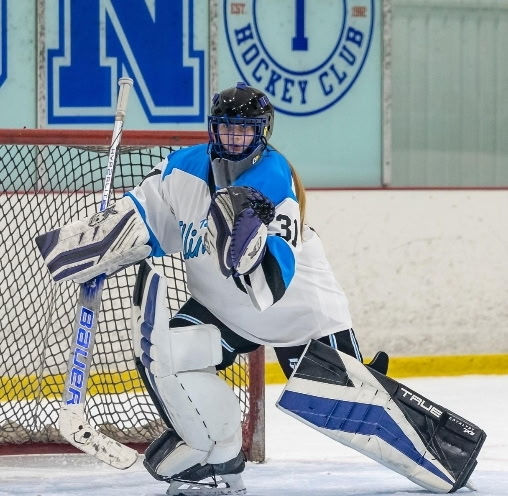
Boarding and open-ice checks make hockey one of the highest-risk sports for AC separations. Studies of collegiate men's hockey consistently rank AC joint injury among the most frequent shoulder diagnoses in the sport.<sup>5</sup>
🏉 Rugby
AC joint injuries are extremely common in rugby due to tackling and rucking mechanics, with some case series reporting that over 40% of acute AC injuries presenting to sports clinics occurred during rugby.<sup>6</sup>
🤼 Wrestling
Among NCAA sports, men's wrestling has one of the highest AC joint sprain incidence rates, driven by direct shoulder contact with the mat and opponents during takedowns.<sup>3</sup>
🚴 Cycling, Skiing, and Snowboarding

These non-contact, high-speed sports produce AC injuries through falls rather than collisions — a rider or skier goes over the front and lands directly on the shoulder.
⚾ Overhead and Throwing Athletes
While less common as an acute injury, baseball, softball, and other overhead athletes can develop chronic AC joint pathology (distal clavicle osteolysis, AC arthrosis) from the repetitive microtrauma of the throwing motion and follow-through, rather than a single traumatic fall.
Across sports, the injury disproportionately affects young men in their 20s, with male athletes sustaining these injuries at more than twice the rate of female athletes.<sup>7,8</sup>
Grading AC Joint Injuries: The Rockwood Classification
AC joint injuries are graded using the Rockwood classification, a six-type system based on which ligaments are torn and how far the clavicle has displaced relative to the acromion.<sup>9</sup>
Type | Ligament Damage | Clavicle Displacement | Typical Management |
I | AC ligament sprain only | None | Conservative |
II | AC ligament torn, CC ligament sprained | Mild (<25%) | Conservative |
III | AC and CC ligaments torn | 25–100% superior | Usually conservative; individualized |
IV | AC and CC ligaments torn | Clavicle displaced posteriorly into trapezius | Usually surgical |
V | AC and CC ligaments torn, deltotrapezial fascia stripped | Severe (100–300%) | Usually surgical |
VI | AC and CC ligaments torn | Clavicle displaced inferiorly (rare) | Surgical |
Types I and II are considered low-grade and make up the vast majority of sport-related AC injuries — in NCAA football, low-grade sprains accounted for over 96% of all reported AC joint injuries. Types IV through VI are rare but almost universally require surgical stabilization. Type III sits in a well-known gray zone in sports medicine, discussed further below.
It's worth noting that more recent research has challenged how tightly the Rockwood grade predicts an athlete's actual symptoms and function, particularly for Type III injuries — imaging severity and clinical severity don't always match up, which is part of why treatment of Type III injuries is individualized rather than automatic.<sup>11</sup>
Signs and Symptoms

Athletes with an AC joint injury typically report:
Pain localized to the top of the shoulder, at the point of the AC joint

A visible or palpable "step-off" deformity in higher-grade injuries, where the clavicle sits proud relative to the acromion
Pain with cross-body (horizontal adduction) movement, reaching across the body, or lying on the affected side
Pain with overhead reaching or lifting
Swelling and bruising over the joint
A feeling of instability or "popping" in more severe separations
Diagnosis
Physical Examination
Clinical exam includes:
Inspection for deformity, swelling, and symmetry compared to the uninjured side
Palpation directly over the AC joint to localize tenderness
Cross-body adduction test — reproduces pain by compressing the AC joint
Active compression (O'Brien's) test — helps differentiate AC pathology from labral pathology
Paxinos test — direct compression across the joint to reproduce symptoms
Assessment of the distal clavicle for instability in the anterior-posterior and superior-inferior planes
A thorough neurovascular exam, since high-energy mechanisms can occasionally involve the brachial plexus
Imaging
Standard AP radiographs are the first-line imaging study and are often sufficient to identify displacement and grade the injury.
Zanca view (AP with 10–15° cephalic tilt) reduces overlap from the scapular spine and better visualizes the AC joint.
Bilateral weighted stress views were traditionally used to distinguish Type II from Type III injuries but are used less often today, as they add radiation and discomfort without consistently changing management.
Axillary view helps evaluate posterior displacement, important for identifying Type IV injuries.
MRI is reserved for higher-grade injuries, persistent pain, suspected concomitant glenohumeral pathology (labral tears, rotator cuff injury), or when surgical planning is being considered — concomitant shoulder pathology has been identified in a meaningful proportion of higher-grade AC injuries.<sup>12</sup>
Treatment
Conservative (Nonoperative) Management — Types I, II, and Most Type III
The majority of AC joint injuries in sport are treated without surgery. A phased rehabilitation approach is standard:
Phase 1: Protect and Calm the Pain
Sling immobilization for comfort (typically 1–2 weeks for low-grade injuries)
Ice, activity modification, and relative rest
Gentle pendulum and pain-free range of motion exercises
Phase 2: Restore Motion
Progressive active and active-assisted range of motion
Address compensatory stiffness in the cervical spine and thoracic spine that develops during immobilization
Begin scapular positioning and postural retraining
Phase 3: Restore Strength
Rotator cuff strengthening
Scapular stabilizer strengthening (serratus anterior, lower trapezius, middle trapezius)
Deltoid and periscapular strengthening, progressing loads gradually to avoid compressive stress across the healing joint
Phase 4: Sport-Specific Progression
Closed-chain and contact-simulation drills for contact athletes
Interval throwing programs for overhead athletes
Return-to-contact clearance testing
Even Type I and II injuries — long assumed to be "minor" — deserve a full rehab progression. Emerging literature has raised concern that some athletes with low-grade AC injuries go on to have residual pain, weakness, or instability if rehab is cut short, likely related to insufficient time for ligament healing before returning to full load.<sup>13</sup>
Type III Injuries: The Ongoing Debate
Type III injuries are the most-studied gray zone in AC joint management. Multiple long-term comparative trials — including one with 18- to 20-year follow-up — have found that nonoperative and operative treatment of Type III injuries produce similar long-term functional outcomes, with nonoperative treatment allowing a faster return to sport and avoiding surgical risk. Because of this, most sports medicine guidelines today favor an initial trial of nonoperative treatment for Type III injuries, reserving surgery for athletes who fail conservative care or who have persistent pain, weakness, or scapular dyskinesis affecting performance — particularly overhead and throwing athletes, where AC joint mechanics matter more for performance.
Surgical Management — Types IV, V, VI, and Select Type III
Surgical stabilization is generally recommended for Type IV, V, and VI injuries due to the severity of ligamentous and fascial disruption. Common procedures include:
Coracoclavicular ligament reconstruction (allograft or synthetic augmentation)
Distal clavicle excision (for chronic AC arthrosis or degenerative pain, rarely for acute stabilization alone)
Arthroscopically-assisted AC joint stabilization techniques, which have grown in popularity as they allow assessment and treatment of concomitant glenohumeral pathology at the same time
Post-surgical rehabilitation follows a longer, more conservative timeline than nonoperative care, typically involving several weeks of protected immobilization before motion and strengthening progress.
Return to Play
Return-to-sport timelines vary considerably by grade, sport, and treatment pathway:
Injury | Typical Return to Sport |
Type I sprain | 1–2 weeks |
Type II sprain | 2–4 weeks |
Type III (nonoperative) | 4–8 weeks |
Type III (operative) | 4–6 months |
Type IV–VI (operative) | 4–6 months |

A recent systematic review of modifiable factors affecting return to sport after AC joint injury found that structured rehabilitation, sport-specific progression, and criteria-based (rather than time-based) clearance were consistently associated with better and faster return-to-sport outcomes, regardless of whether the athlete was treated operatively or nonoperatively. Before returning to contact or overhead sport, athletes should demonstrate:
✅ Full, pain-free range of motion
✅ Symmetrical strength of the rotator cuff and scapular stabilizers
✅ No pain with cross-body adduction or direct joint palpation
✅ Successful completion of sport-specific and contact-simulation drills
✅ Psychological readiness to accept contact or loading again
Injury Prevention
There is no way to fully "bulletproof" the AC joint against a direct fall or check, but athletes can reduce their risk and improve their resilience through:
Properly fitted shoulder pads and protective equipment in contact sports
Scapular and rotator cuff strength programs maintained throughout the season
Learning safe falling and landing techniques (particularly in hockey, cycling, and skiing)
Full rehabilitation of prior AC injuries before returning to sport, rather than pushing through residual instability
Final Thoughts
The AC joint is small, but the consequences of getting its management wrong are not. Most AC joint injuries in sport are low-grade and heal well with a properly progressed rehabilitation program, but higher-grade injuries and the persistent Type III gray zone require an individualized decision built around the athlete's sport, position, and goals — not a one-size-fits-all protocol pulled from a grading chart.
For contact, collision, and overhead athletes, a comprehensive sports medicine approach — accurate grading, a criteria-based rehab progression, and a true assessment of readiness before return to play — gives the best chance of getting back to competition without lingering shoulder problems.
Landed on your shoulder or dealing with pain at the top of your shoulder? Let us help you get on the road to recovery. Call today for your shoulder assessment.
Athletic Edge & Wellness
📍 Algonquin, Illinois 📞 224-505-3343 🌐 www.edge360wellness.com


Comments